Best AI Detector APIs for Developers (What Actually Works in 2026)
Best AI detector APIs for developers in 2026. Real-world testing of Winston AI, Pangram Labs, Detecting-AI, and what actually works at scale.


If you’re a developer evaluating AI detection APIs in 2026, you’re probably already skeptical. You know the hard truth:
- AI detection isn’t binary
- False positives are expensive
- “99% accuracy” claims don’t survive production
So this article isn’t a list of shiny dashboards.
This is about which AI detector APIs actually hold up in real workflows: education platforms, publishing pipelines, hiring systems, and content moderation tools.
What developers need from AI detector APIs in 2026
Before tools, let’s set the bar. A usable AI detection API today must:
- Handle AI-assisted text, not just raw AI output
- Support long-form content reliably
- Return interpretable signals, not just a score
- Scale without destroying trust (or budgets)
Anything less becomes a liability.
Winston AI API: best for reporting, audits, and institutions
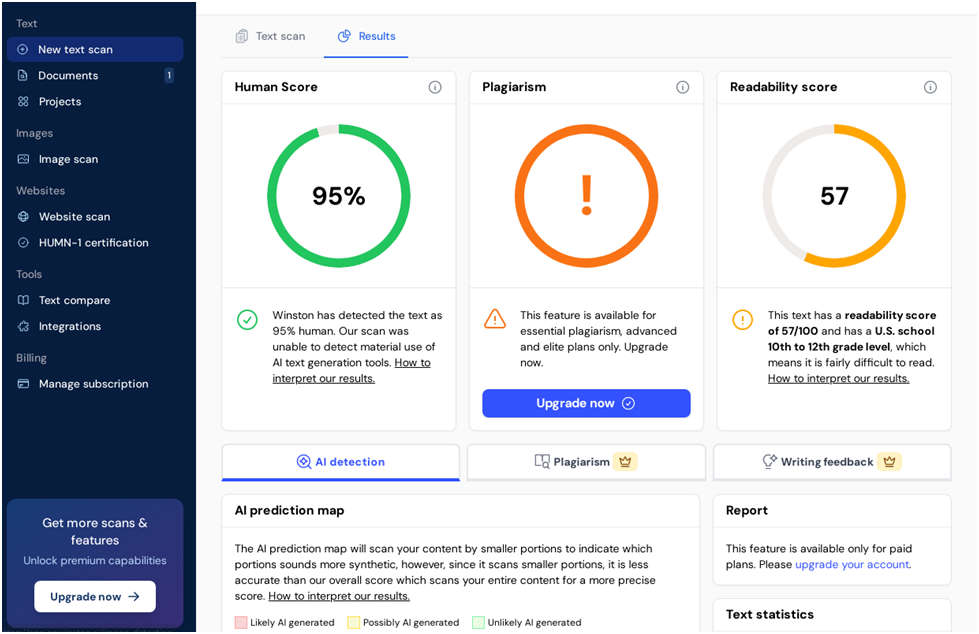
Winston AI is one of the few tools that clearly understands it’s being used in high-stakes environments.
Why Winston’s API works
- Word-based credit model (predictable at scale)
- PDF reports + explainability
- Text comparison endpoints
- Image detection support (rare, but useful)
This makes Winston a strong choice for:
- LMS platforms
- publishers
- compliance workflows
- internal content audits
The key difference is defensibility. Winston’s output is designed to be reviewed, shared, and justified.
Limitations:
The results are still probability-based. You should never automate punitive actions purely on the score.
Pangram Labs API: best for modern “AI-assisted” workflows
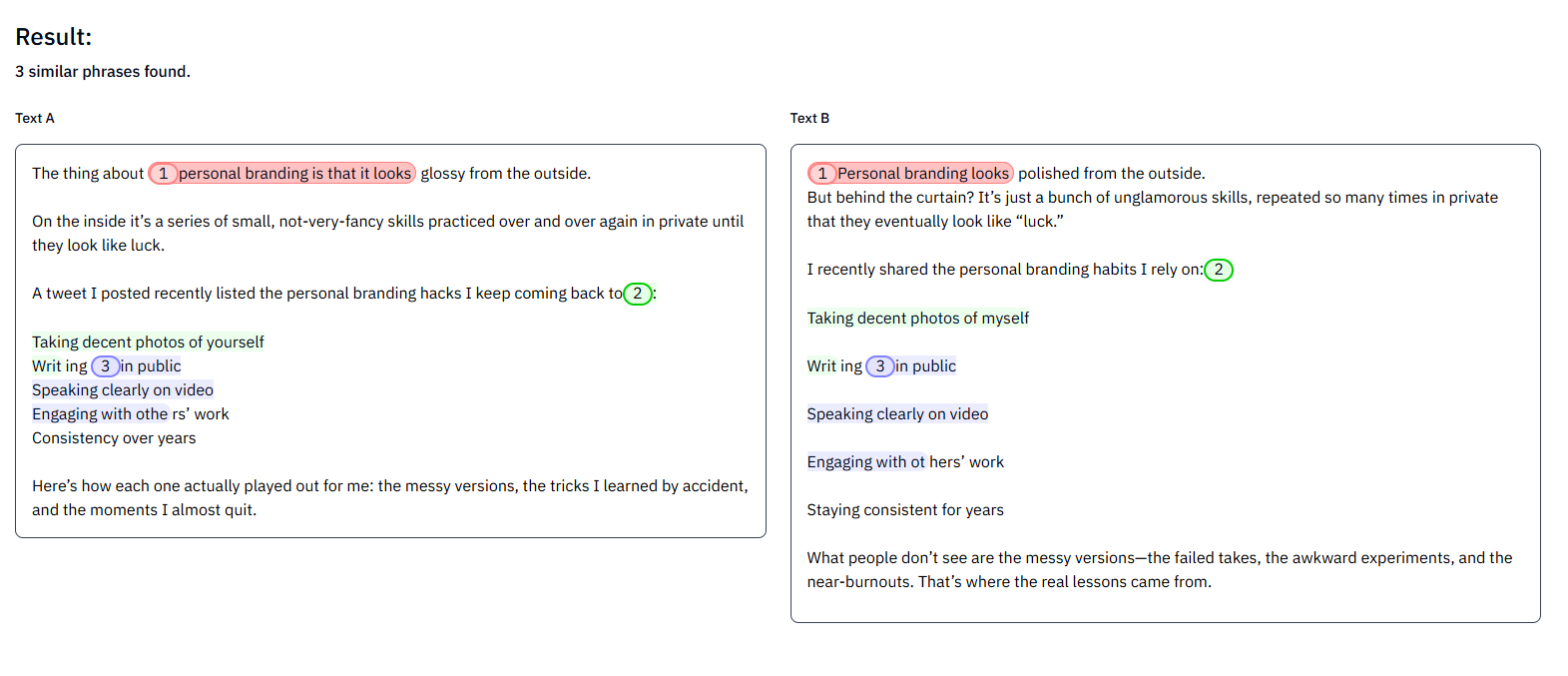
Pangram Labs is one of the most developer-forward tools in this space. Its biggest 2026 advantage is that it explicitly supports AI-assisted classification, not just AI vs human.
Why developers like Pangram
- Clean REST API
- Side-by-side text comparison
- Phrase-level AI highlighting
- Clear category signaling (AI / human / AI-assisted)
This is ideal for:
- editorial platforms
- review pipelines
- collaborative writing tools
Pangram’s API is less about “catching cheaters” and more about understanding authorship context, which is exactly what modern products need.
Detecting-AI API: best for experimentation and multi-tool stacks
Detecting-AI offers one of the most flexible API bundles on the market.
Why it’s useful
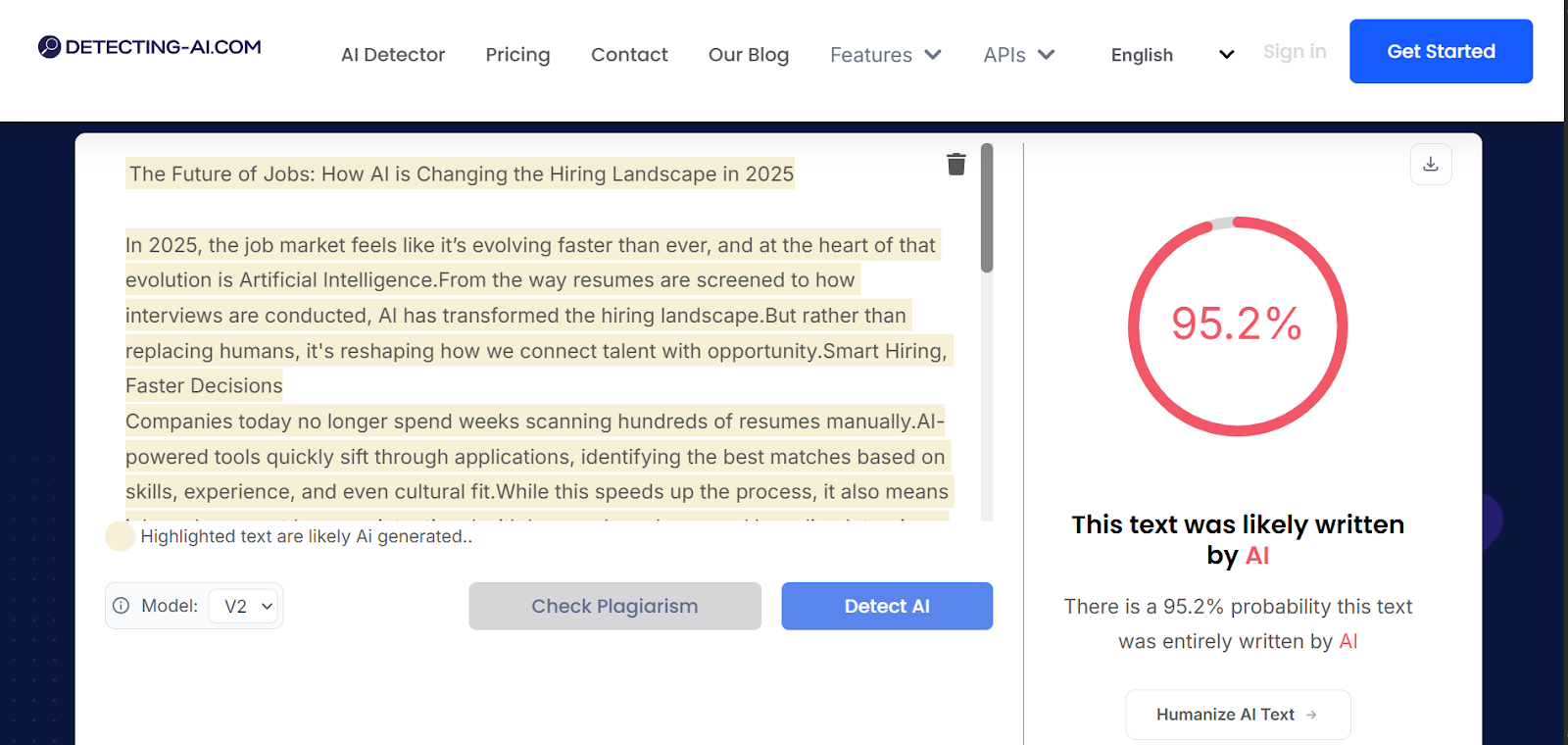
- Separate APIs for detection, humanization, plagiarism
- Adjustable model versions
- Language support beyond English
- Affordable entry pricing
This makes it attractive for:
- startups prototyping moderation systems
- SEO tools
- content QA pipelines
However, based on testing, Detecting-AI is better as a signal provider than a verdict engine. It works best when paired with human review or secondary checks.
Originality.ai API: best for SEO and publisher stacks
Originality.ai is widely used in SEO and content operations.
Why developers use it
- Combined AI + plagiarism endpoints
- Site-wide scanning capabilities
- Chrome + workflow integrations
- Multiple detection modes (Lite / Turbo)
It’s particularly useful when:
- AI detection is part of a larger content quality system
- plagiarism and originality matter as much as AI usage
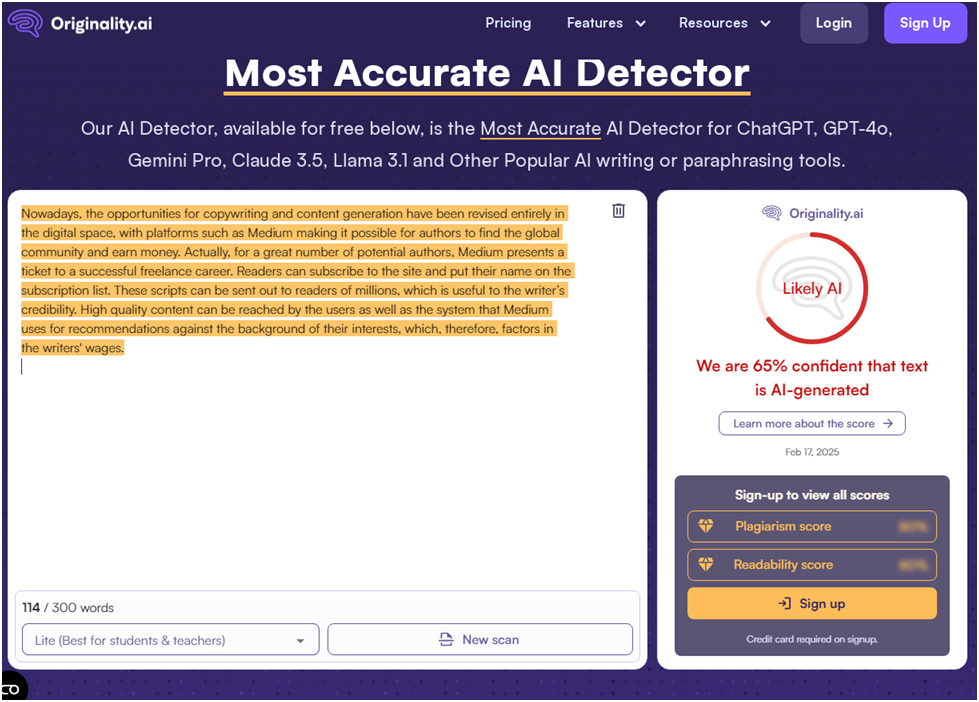
Caution: Turbo mode is strict and can increase false positives—great for enforcement, risky for creative work.
Why most AI detector APIs fail in production
Across tools, the same issues keep showing up:
- Short-form content (resumes, bullets) breaks detectors
- Edited or polished human writing gets flagged
- Scores fluctuate across updates
- Binary labels don’t match real usage
That’s why no AI detector API should be used alone in hiring, grading, or takedowns.
How developers should use AI detector APIs in 2026
The safest pattern looks like this:
- AI detector API → early signal
- Human or editorial review → judgment
- Provenance / metadata (when available) → verification
Detection is a filter, not a decision engine.
Final verdict: what actually works
- Winston AI → best for audits, institutions, defensible reporting
- Pangram Labs → best for modern AI-assisted writing platforms
- Detecting-AI → best for flexible, experimental stacks
- Originality.ai → best for SEO and publishing workflows
In 2026, the winning systems aren’t the strictest. They’re the ones that understand how content is actually created now.
Further reading
I’ve tested and reviewed 30+ AI detectors in 2026, including false positives, pricing, and real-world workflows across education, SEO, and publishing.
Affiliate disclosure
The links in this article are affiliate links. If you choose to purchase through them, I may earn a small commission at no extra cost to you.
That said, every review, test, and comparison in this piece is based on my own hands-on use of the tools discussed. I test these products with real writing examples, note both strengths and limitations, and include tools only if they add genuine value. Compensation never influences rankings, recommendations, or conclusions.
I believe transparency matters — especially when writing about AI tools — and I’ll always prioritize accuracy and honesty over affiliate incentives.