Best AI Writing Tools for SEO in 2026: What Google Actually Rewards


In 2026, the conversation around AI writing tools has shifted.
People who are still asking, “Can AI write blog posts?” have already been left behind.
The ones thinking “Why do some AI-assisted articles rank while most don’t?” are the ones who will make waves.
After testing and publishing with multiple AI writing tools, one thing is clear: Google isn’t rewarding tools, it’s rewarding outcomes.
AI helps with your content marketing and SEO game. But only when it aligns with how search engines now evaluate content.
What Google Actually Rewards in 2026
Before talking about tools, it’s important to understand the criteria.
Across competitive SERPs, high-ranking AI-assisted content consistently shows:
- Clear search intent alignment: You know what the user is looking for, and your articles deliver them exactly that)
- Evidence of firsthand testing or experience: It's clear you've experimented with what you're talking about, and there's proof in your article that your knowledge is first-hand.
- Strong structure and scannability: People can skim through your article while on the loo, the subway, or while standing in a queue.
- Editorial judgment: You know what to include and what to exclude.
- A visible human role in the workflow: It's not AI slop, it's content that connects with the reader and makes them feel something.
AI-generated content that skips these steps fails and it never ranks.
But thoughtfully-edited AI-written blog posts created using the right tools can still help your articles rank on Google. Curious how? Let's explore in detail.
Tool #1: Rankioz: When SEO Decisions Matter More Than Writing
Most AI tools start with content. Rankioz starts with the strategy and ideation.
Instead of asking “What should this article say?”, it forces you to answer:
- Is this keyword achievable?
- What does the current SERP reward?
- Where are competitors weak?
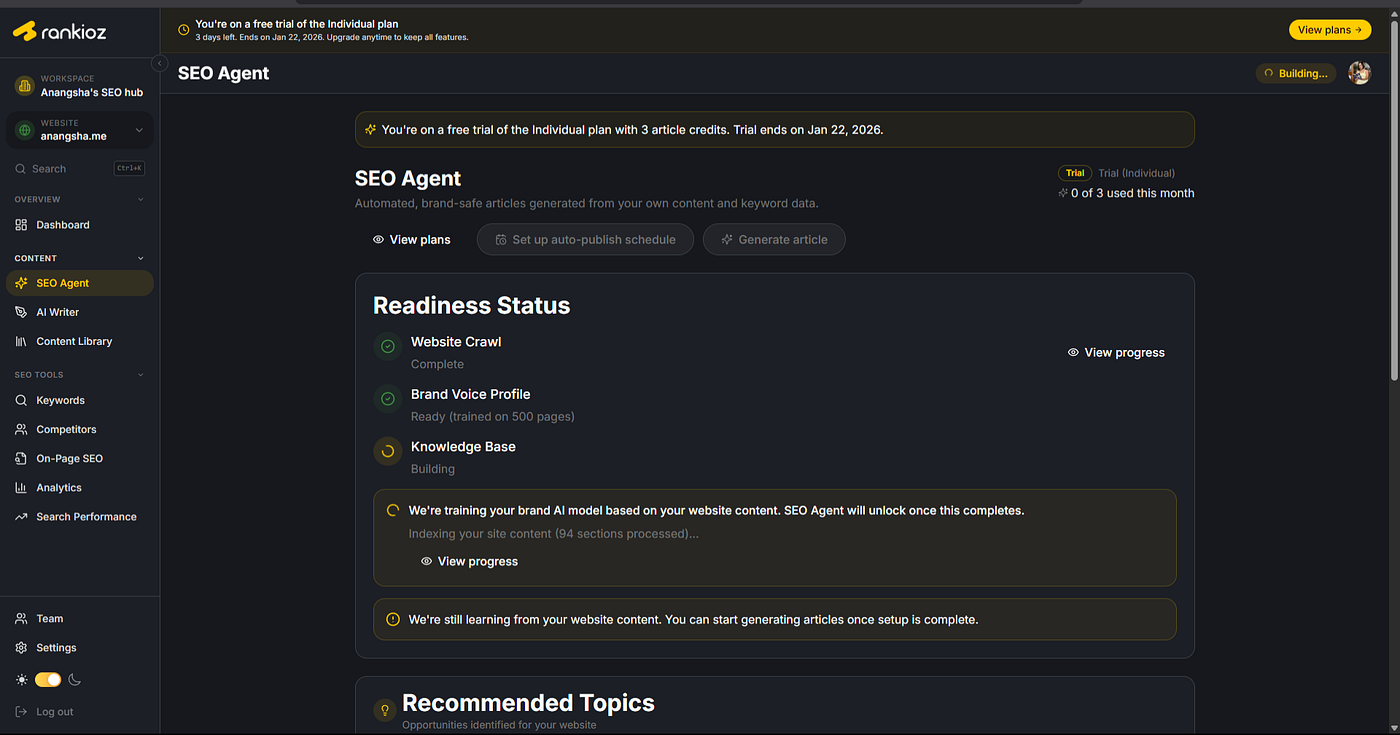
In practice, this changes everything.
When I used Rankioz to plan SEO content, the biggest improvement was topic selection. Several ideas I'd have written were discarded entirely because the ranking odds were poor.
That alone explains why many AI-written blogs don’t rank:
They shouldn’t have existed in the first place.
Rankioz doesn’t write articles for you, it helps you avoid writing the wrong ones.
Tool #2: Koala AI: Execution Works Only After Strategy
Koala AI is excellent at executing a good plan.
Once a topic passes the strategy test, Koala AI helps with:
- SEO-aware outlines
- Clean heading structure
- Long-form drafts that respect search intent
- FAQs and summaries that match ranking patterns
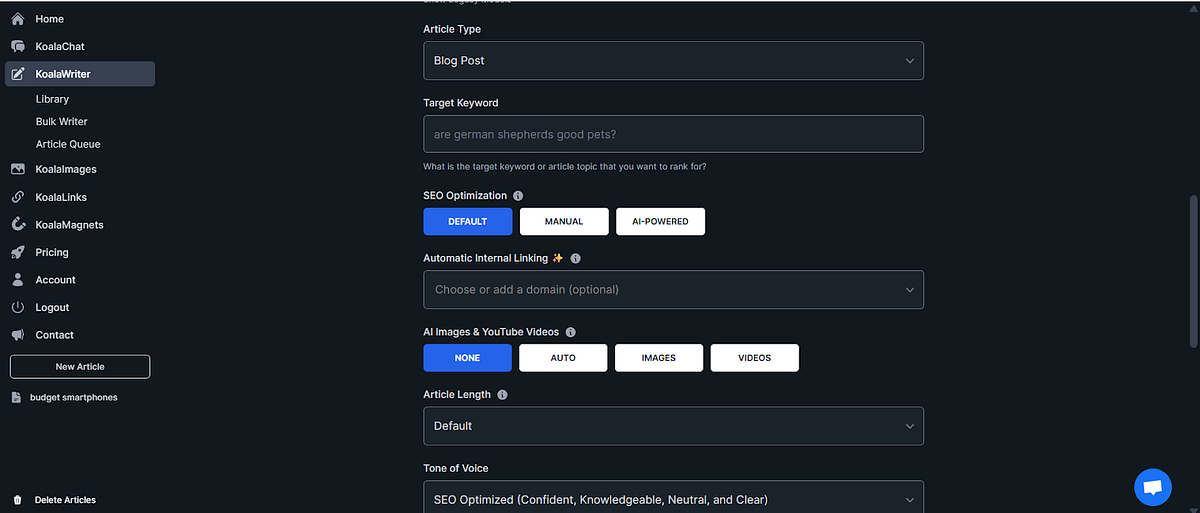
But here’s the catch: Koala AI assumes the topic choice is already correct.
If the keyword intent is wrong, or the SERP favors a different content type, no amount of internal optimization will fix that.
In other words:
- Koala AI amplifies good decisions
- It also amplifies bad ones
That’s not a flaw, it’s how most AI writing tools work in 2026.
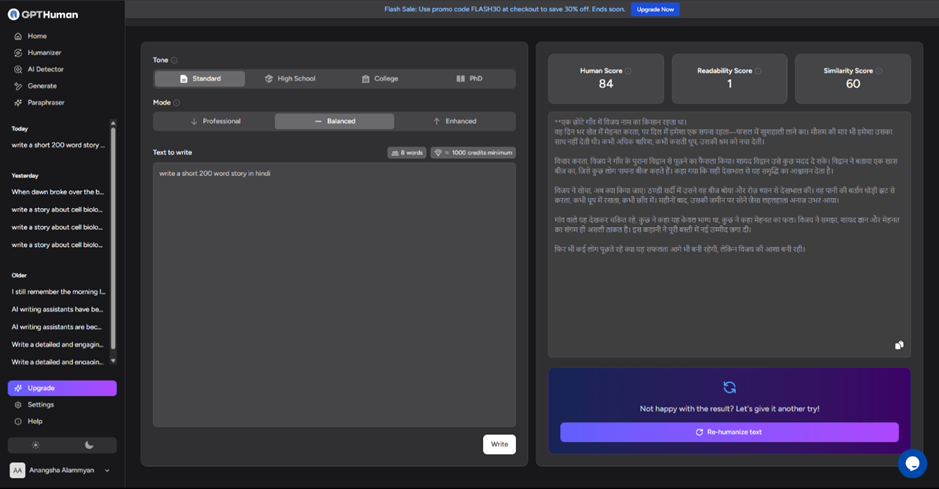
Tool #3: GPTHuman: Human Signals Still Matter (But Later)
Many creators assume their content isn’t ranking because it “sounds AI-written.”
Sometimes that’s true. Often, it’s not.
Tools like GPTHuman are effective at improving the tone, flow, sentence variety, and improving the overall naturalness of your article.
This helps with:
- engagement
- readability
- trust signals
But humanization alone doesn’t create rankings.
In successful workflows, GPTHuman is used after:
- Strategy is finalized
- Structure is locked
- Content intent is satisfied
Humanization is a finishing layer, not a ranking strategy.
Why Most AI Blogs Still Don’t Rank
After reviewing dozens of AI-assisted blogs, the failure pattern is consistent:
- Tools chosen before strategy
- Keywords chosen for volume, not feasibility
- Articles written before the search intent is understood
- Humanization used as a fix, not a polish
The result? Polished content that answers the wrong question.
The SEO Workflow That Actually Works in 2026
The blogs that rank follow this order:
- SEO strategy first: keyword feasibility, intent, SERP analysis.
- Structure second: outline, headings, depth.
- AI-assisted drafting: speed, consistency, coverage.
- Human refinement: examples, opinion, voice.
When AI tools are used inside this framework, they’re powerful. Outside it, they’re just fast, but they generate AI slop. And AI slop won't rank or help you build your content marketing engine in any way.
Where AI Writing Tools Fit Into the Bigger Picture
This article exists to clarify why AI writing tools alone aren’t enough.
If you’re looking for:
- detailed hands-on reviews
- feature breakdowns
- pricing comparisons
- and real testing notes
I’ve documented that process separately in my main breakdown of AI writing tools for SEO, where each tool is evaluated using the same framework described here.
This piece explains the why. That article covers the how.
Final Thought
Google isn’t anti-AI.
It’s anti-shortcuts.
In 2026, AI writing tools don’t win rankings by being smarter writers; they win by supporting smarter decisions.
The best tool isn’t the one that writes the fastest.
It’s the one that helps you publish content that actually deserves to rank.
Affiliate Disclosure: This article may contain affiliate links. If you make a purchase through these links, I may earn a small commission at no extra cost to you. This helps support the channel and allows me to keep creating valuable content. Thank you for your support!