How I Evaluate AI SEO Tools in 2026 (My Real Workflow)


Most AI SEO reviews focus on feature lists. But that’s not how I test tools anymore.
In 2026, almost every SEO platform claims to be “AI-powered.” But after testing 30+ AI SEO tools across real projects, I’ve learned that features don’t matter nearly as much as how a tool fits into an actual SEO workflow.
This is the exact process I use to evaluate whether an AI SEO tool is worth keeping or deleting after a week.
The baseline: what I’m trying to improve
Before testing any tool, I’m clear on one thing:
The goal isn’t more content. The goal is better decisions.
So every tool I test has to help with at least one of these:
- Reduce time spent figuring out what to write
- Improve alignment with real search intent
- Make optimization clearer (not noisier)
- Help content perform across Google and AI-driven search surfaces
If it can’t do that, it doesn’t matter how advanced the AI sounds.
Step 1: I start with a real keyword or problem (not a demo prompt)
I never test tools with fake examples.
I use:
- A keyword I’m already targeting
- Or an underperforming article that needs improvement
This immediately filters out tools that only work in “perfect” scenarios.
Example:
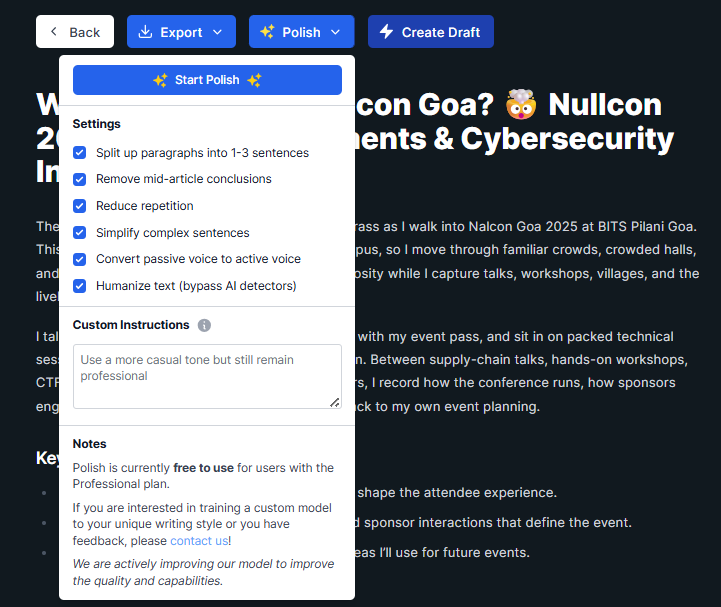
When testing Koala AI, I didn’t just generate a fresh article. I ran an existing piece through its SERP-based optimization and internal linking workflow to see whether it clarified what to fix, not just rewrote everything.
If a tool can’t handle imperfect input, it won’t survive real SEO work.
Step 2: I check whether the tool explains why it suggests changes
This is a big one. Good AI SEO tools don’t just say:
“Add more keywords”
They show:
- Which competitors are ranking
- What topics or entities are missing
- How structure differs from top pages
Example:
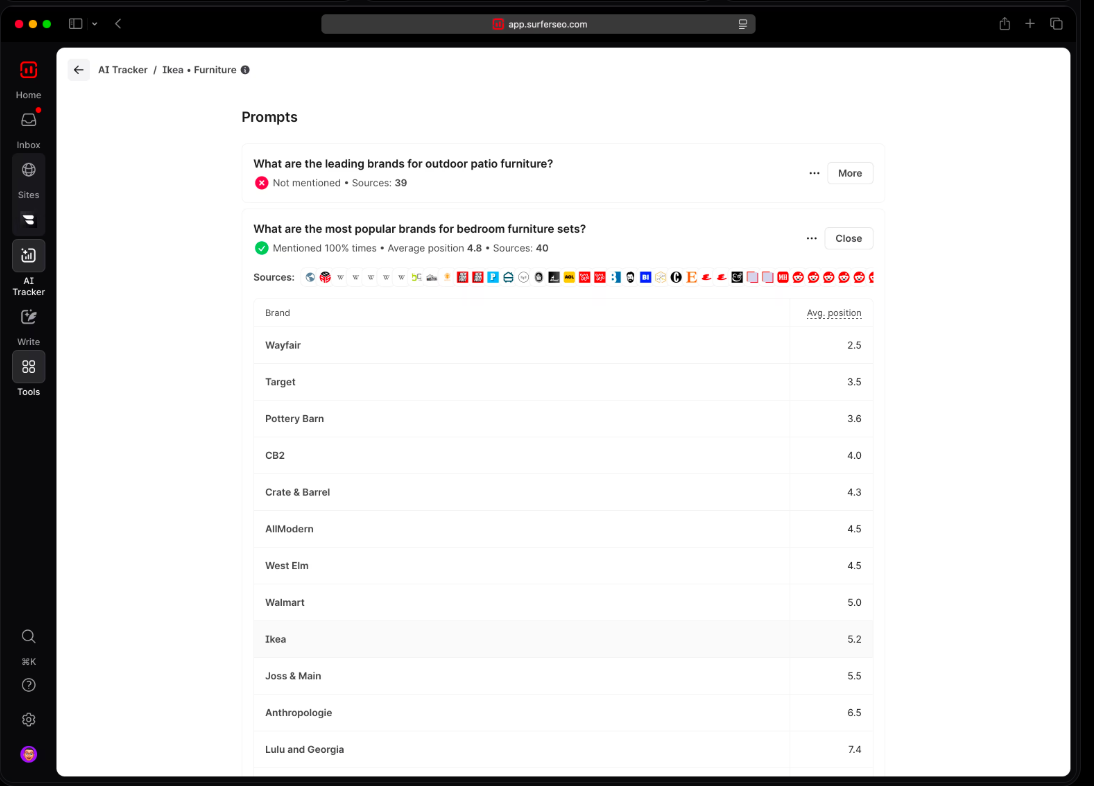
With Surfer SEO, I pay close attention to whether the Content Editor helps me decide what to include: headings, depth, internal links, rather than just chasing a score.
If I can’t explain why a change improves SEO, I don’t trust it.
Step 3: I test how well it fits into an end-to-end workflow
A tool doesn’t live in isolation. I look for whether it naturally supports:
- Research → outlining → writing → optimization → publishing
- Or whether I constantly have to export, reformat, and re-check everything
Example:
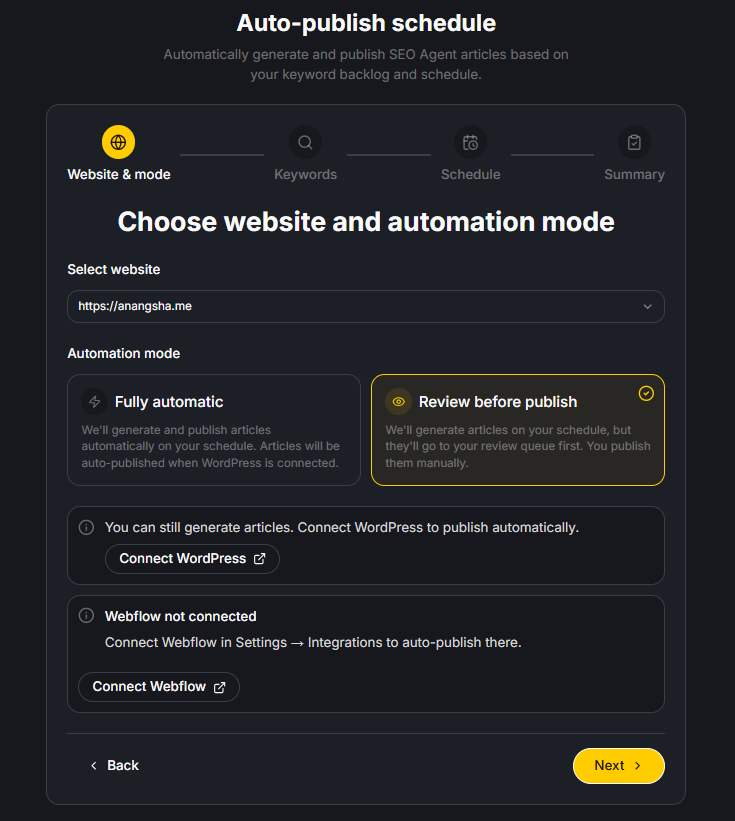
When testing Rankioz, what stood out was how the platform picked up brand tone from existing pages and handled publishing workflows with minimal friction.
If a tool saves time but adds mental overhead, it’s not a win.
Step 4: I look at AI visibility, not just Google rankings
SEO in 2026 doesn’t stop at blue links. I now evaluate whether a tool helps with:
- AI answer visibility
- Brand mentions inside ChatGPT, Gemini, or Perplexity
- Prompt-level discoverability
Example:
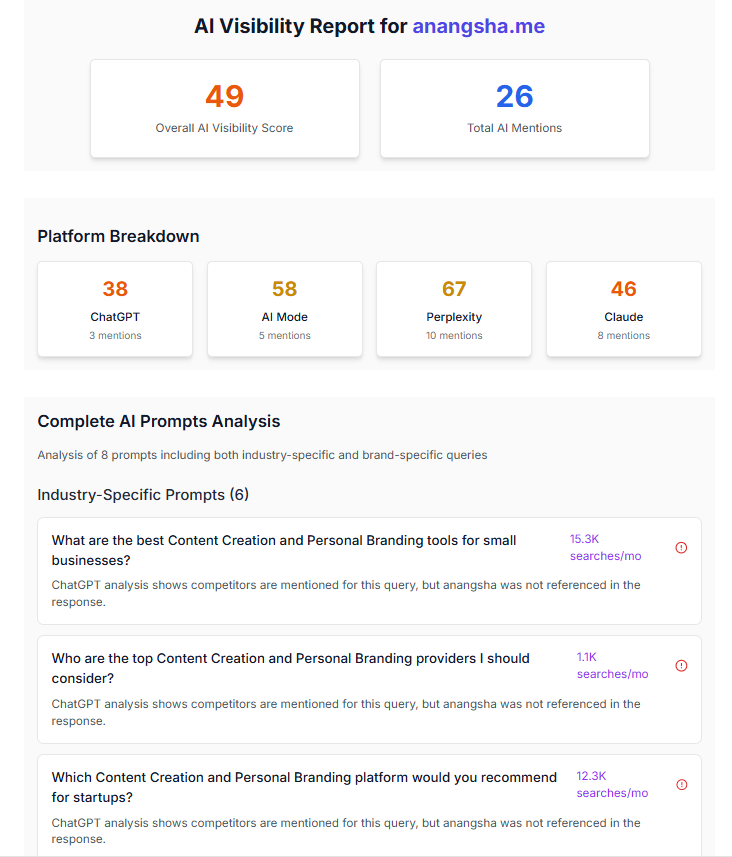
Indexly became part of my testing stack because it shows how and where a brand appears across AI-generated answers. This is something traditional SEO tools don’t cover yet.
If a tool ignores AI search surfaces entirely, it’s already behind.
Step 5: I ask one uncomfortable question
Before keeping any AI SEO tool, I ask myself:
Would I still use this if it didn’t save typing time?
Tools that survive this question usually:
- Reduce decision fatigue
- Clarify priorities
- Make SEO feel calmer, not more complex
Tools that don’t?
They usually get replaced by a spreadsheet and human judgment.
What I deliberately ignore when evaluating tools
Some things don’t factor into my decision at all:
- Flashy dashboards
- Abstract “SEO scores” without explanation
- Claims of fully automated rankings
- Tools that try to replace strategy instead of supporting it
In my experience, those are the fastest paths to generic content.
Why this matters (and how it connects to my full comparison)
This workflow is the filter I used to narrow 30+ tools down to a much smaller list that actually helped my SEO work in 2026.
If you want to see:
- Which tools passed this process
- How they compare by use case
- And which ones I’d personally pay for again
I’ve broken that down in detail here→ What’s the Best AI for SEO? I Tested 30+ Tools. Here Are the 8 Worth Using (2026)
Final thought
AI SEO tools are powerful, but only when they’re used to support good judgment, not replace it.
The moment a tool helps you think more clearly about search intent, structure, and relevance, that’s when it becomes worth keeping.
Everything else is just noise.
Affiliate disclosure: This article contains affiliate links. If you purchase a subscription through these links, I may earn a small commission at no extra cost to you. Thank you for supporting my work!