What Makes an AI Website Builder Actually SEO-Friendly in 2026


“SEO-friendly” has become one of those phrases every AI website builder loves to claim. But after testing 20+ AI website builder tools side by side in 2026, I’ve learned something important:
Most AI website builders are SEO-safe, but very few are SEO-strong.
Here’s what actually matters if you care about search visibility, not just launching fast.
1. Control beats automation
AI builders are great at generating defaults. SEO-friendly builders give you manual control over those defaults.
At minimum, you should be able to:
- Edit meta titles and descriptions per page
- Customize H1–H3 structure
- Add alt text to images
- Control indexing (noindex, sitemap, robots.txt)
If a builder locks these behind automation with no override, it’s not SEO-friendly, it’s SEO-restricted.
2. Clean structure matters more than AI copy
In 2026, Google doesn’t reward “AI-written” content just because it exists. It rewards clarity and structure.
The builders that performed best produced:
- One clear H1 per page
- Logical section hierarchy
- Scannable layouts (short sections, clear CTAs)
Ironically, the simpler tools often did better here than flashy ones overloaded with animations and effects.
3. Page speed is no longer optional
Most AI builders now generate mobile-responsive sites — that's the bare minimum. What separates the SEO-friendly ones:
- Lightweight layouts
- Reasonable image handling
- Minimal layout shift on mobile
If your site looks good but feels slow, SEO will suffer, no matter how good the copy is.
4. Export and lock-in affect long-term SEO
This is where many AI builders fail.
SEO-friendly builders allow:
- Code export or migration
- Custom domains on lower tiers
- The option to move away later
If you can’t leave a platform without rebuilding your site, you’re betting your SEO future on that tool’s roadmap, not yours.
5. AI helps launch, humans still finish the job
The best results I saw came from a simple workflow:
- Use AI to generate structure and first draft
- Edit layout and hierarchy first
- Rewrite copy for specificity and credibility
- Replace stock images
- Manually set SEO basics
AI accelerates the start.
Human judgment still decides whether a site ranks.
Real examples from my 2026 testing (IWCON case study)
To make this less theoretical, here are three moments from my IWCON 2025 test where SEO-friendliness (or the lack of it) showed up clearly.
1: Durable strong structure, limited image SEO control
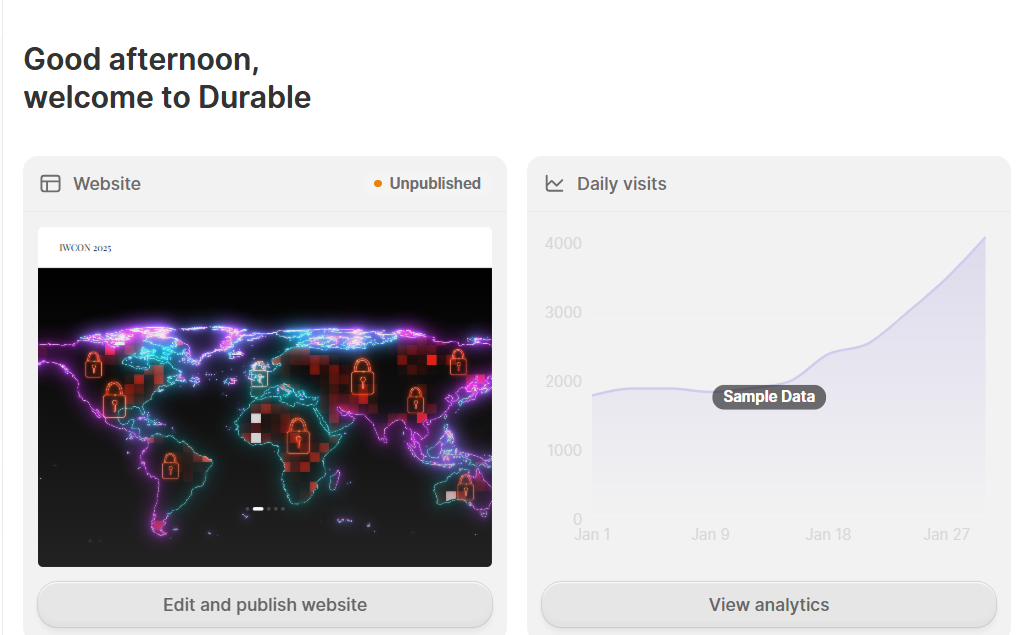
Durable generated a complete, publish-ready conference website in under five minutes. The structure was clean, sections were logically ordered, and the page hierarchy made sense right out of the gate.

Where it fell short for SEO was image control.
When I regenerated images for the team section, Durable repeatedly served generic stock photos. I had to manually upload headshots and tweak bios to maintain credibility and brand trust.
Why this matters for SEO:
Clean structure helps indexing, but stock visuals without meaningful alt text weaken topical relevance and trust signals.
2. Readdy: SEO-friendly by design, not just automation
Readdy stood out because it didn’t immediately generate the site. Instead, it showed me a section blueprint first: Hero, About, Speakers, Schedule, Registration, FAQ.
Once approved, it generated:
- Realistic speaker bios
- A two-day schedule with proper headings
- FAQs that didn’t sound robotic
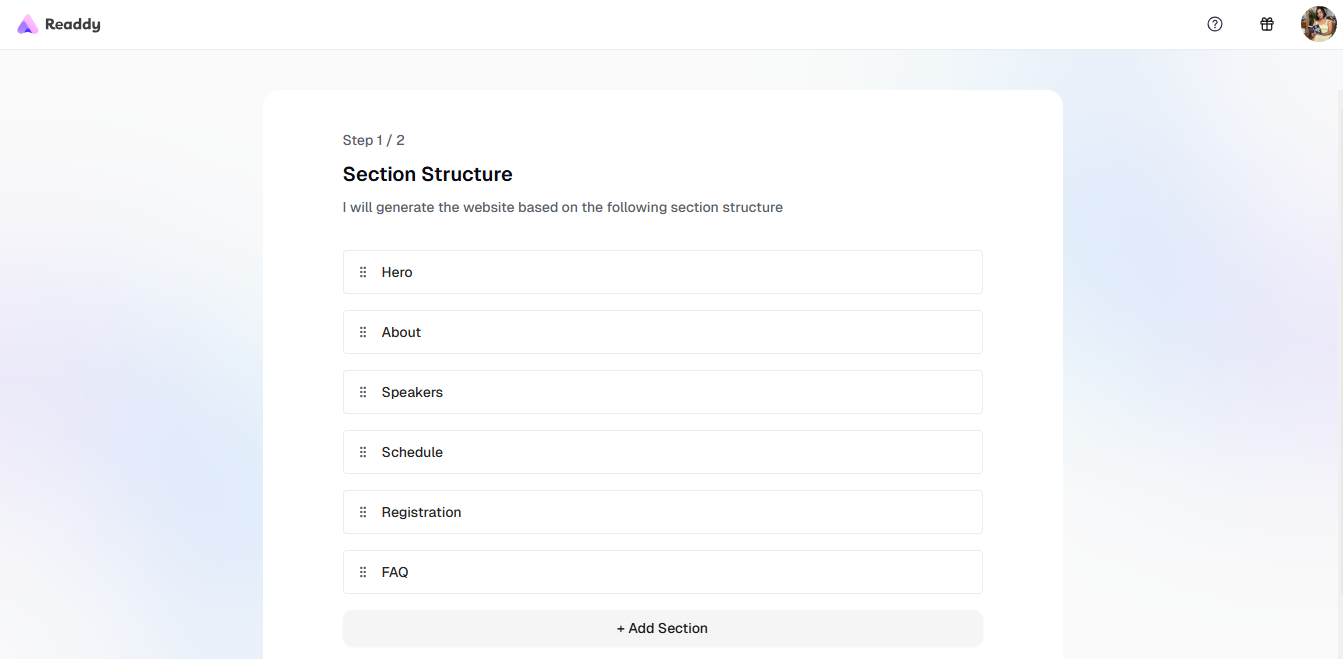
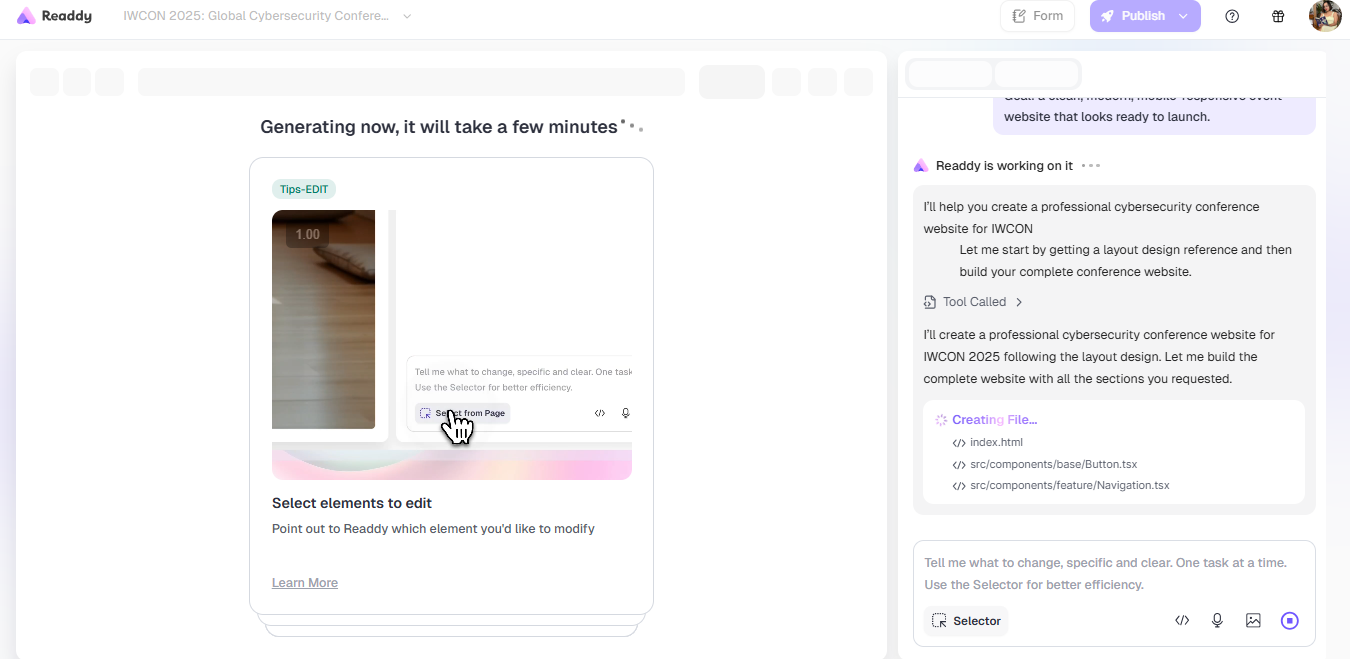
Before publishing, Readdy also generated SEO metadata automatically, and allowed manual edits. This combination of AI defaults + human override is exactly what SEO-friendly builders should offer in 2026.
Why this matters for SEO:
Search engines reward clarity. Readdy’s structure-first workflow makes it harder to accidentally publish a messy page.
3. Mobirise: ultimate control, but cleanup required
Mobirise generated a very large website by default: extra pages, sections I didn’t ask for, and heavy blocks. I spent time deleting unnecessary elements before publishing.
The upside? Full control.
- Direct access to HTML and CSS
- Ability to edit structure at the code level
- Full ZIP export for hosting anywhere
This makes Mobirise extremely SEO-friendly if you’re willing to put in manual effort.

Why this matters for SEO:
Control and ownership matter long-term. Builders that let you clean up, optimize, and migrate give you more SEO leverage over time.
The bottom line
In 2026, an SEO-friendly AI website builder is the one that:
- Gets structure right
- Gives you control
- Stays out of your way once the site is live
If SEO matters to you, treat AI builders as launch tools, not growth engines, and choose accordingly.
Affiliate disclosure: This article contains affiliate links. If you purchase a subscription through these links, I may earn a small commission at no extra cost to you. Thank you for supporting my work!