Why AI Image Generators Still Need Human Judgment in 2026
Why AI image generators still need human judgment in 2026, with real examples from client work, revisions, text accuracy, and brand decisions.


In 2026, AI image generation is no longer a novelty.
It’s baked into everything: ads, thumbnails, pitch decks, brand launches, and “quick visuals” for social posts. The outputs are faster. The interfaces are smoother. The results are often stunning on the first try.
And yet, after testing 30+ AI image generators on real creator workflows and client-ready use cases, I’ve become more convinced of one thing:
AI can generate images. Human judgment still decides what’s usable.
This is because real work isn’t just about generating something that looks nice. It’s about meaning, context, accuracy, taste, and responsibility.
The 2026 gap is judgment.
Most AI tools now clear the “wow” bar. Quality is no longer a differentiator.
The bigger problem is the second layer:
- Does this image communicate what I intend?
- Will it work on the platform it’s meant for?
- Will it survive revisions?
- Can I use it commercially without headaches?
- Will a real human trust it?
That’s where judgment comes in. And it’s where most AI generators still need help.
1) The “first image” is easy. The second revision reveals everything.
AI is fantastic at first drafts.
But client work is rarely first draft work.
You get feedback like:
- “Can we make it feel more premium?”
- “Same concept, but less aggressive.”
- “Keep the subject, change the setting.”
- “Make it look like us.”
This is where tools separate into two categories:
- Generators
- Workflows
In my tests, DeeVid AI stood out not just because it produced strong images quickly, but because it treated the process like a workflow: editing was integrated (inpainting/outpainting, tweaks, iterations) rather than forcing a full restart every time.
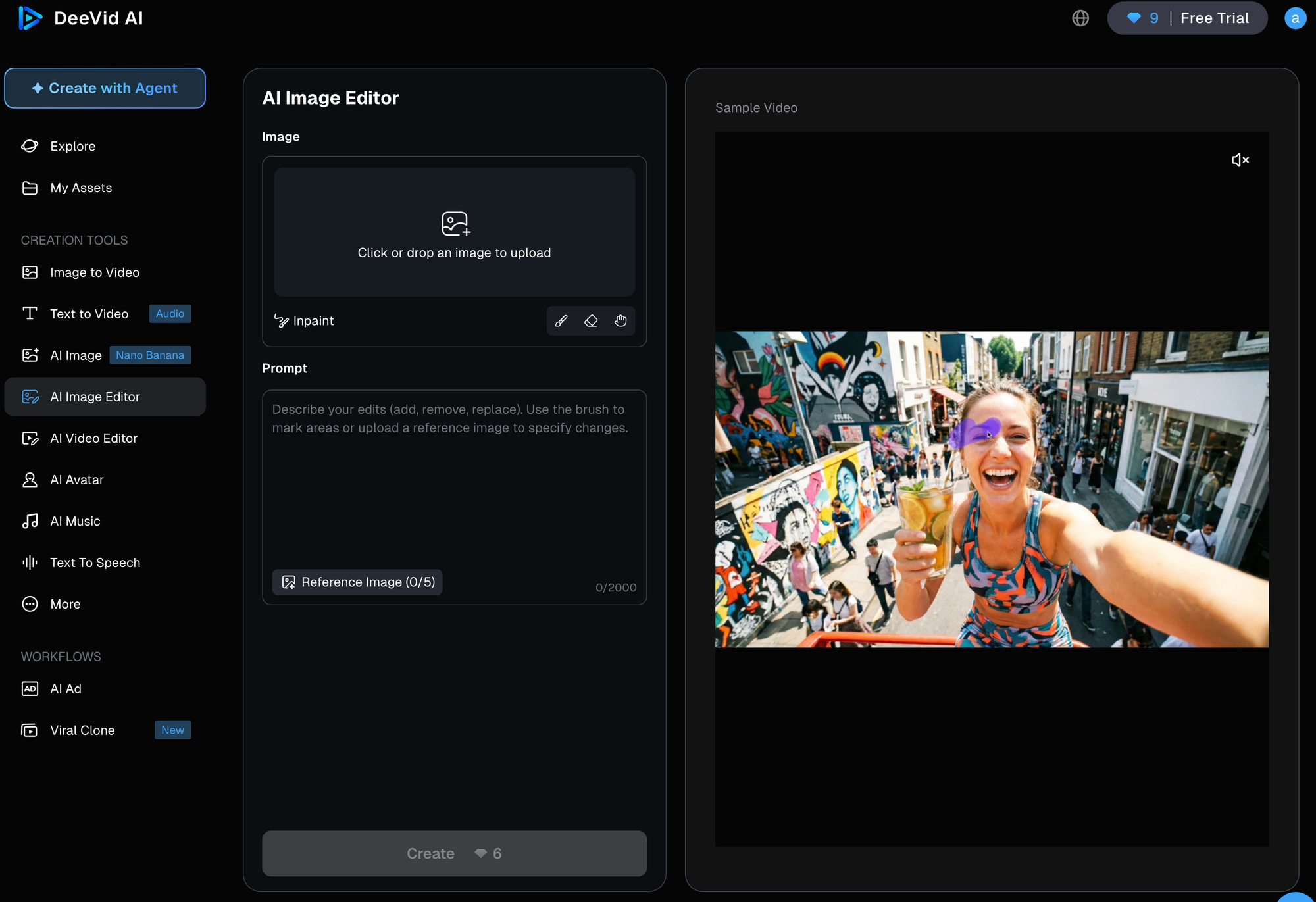
That matters because revisions are where time disappears.
And judgment is what tells you whether a revision request needs:
- a prompt tweak,
- a targeted edit,
- or a human stepping in to fix nuance.
2) “Text in images” is still a human responsibility.
2026’s big shift is that images don’t just need to look good. They need to say things.
Posters. Thumbnails. Banners. Announcements. Infographics.
This is why Nano Banana Pro (Gemini) is such a fascinating case study. It behaves less like a “text-to-image toy” and more like a next-gen editor:
- strong layout instincts,
- typography placement,
- multilingual text support,
- targeted edits and photo blending.
But when I tested it with a real prompt for an IIT Guwahati alumni meet poster, the results showed the exact limitation that makes human judgment non-negotiable:
- The English poster looked fantastic.
- The Hindi version was a disaster.
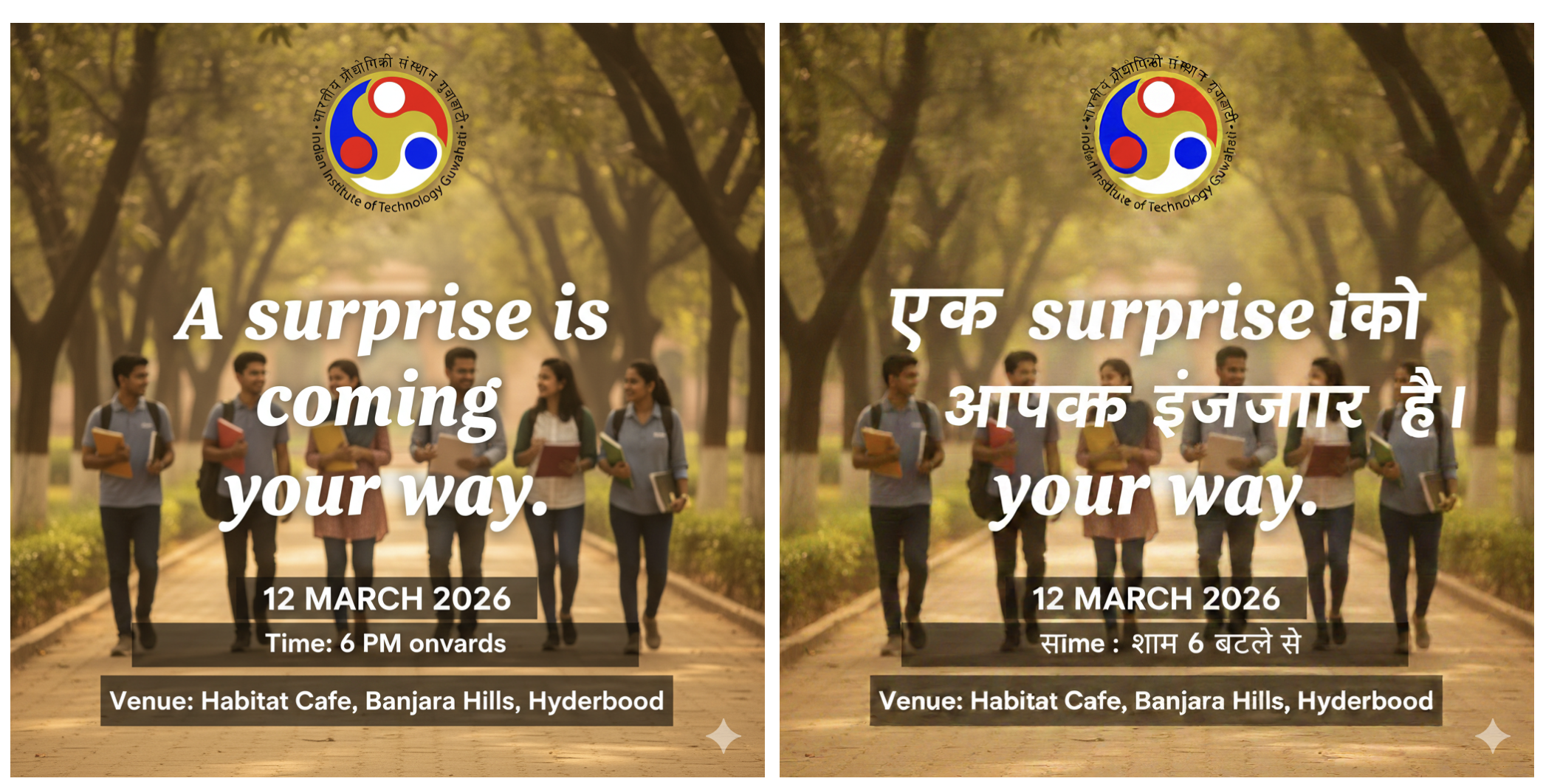
And this is the trap: at first glance, AI-generated text often looks correct.
But “looks correct” isn’t good enough when it’s public-facing.
A human catches:
- spelling errors,
- incorrect naming,
- awkward phrasing,
- cultural tone mismatches,
- and the subtle “this feels off” that makes a brand look careless.
AI can render text. Humans still own the responsibility of accuracy.
3) The watermark problem is a judgment problem, not a feature problem.
A lot of creators treat watermarks as an inconvenience.
In real client work, they’re a decision point.
Nano Banana Pro can produce very usable visuals for posters, diagrams, and quick edits, but Gemini images always include a watermark/logo. That alone changes how (and where) you can use the output.
A tool can be powerful and still be the wrong choice for a specific job.
Judgment is understanding that:
“This is great for internal drafts” is not the same as “This is ready for a paid campaign.”
4) Face likeness still exposes the boundary between “AI magic” and “human trust.”
One of the most common requests in real workflows is: “Can we make this look like me?”
In my Medium article, I was careful to call out that Nano Banana Pro isn’t consistently reliable for identity-consistent headshots. It can work — but it’s hit or miss.

That distinction matters, because faces are high-stakes. They affect:
- trust,
- credibility,
- safety,
- and brand perception.
People forgive a slightly weird background. They don’t forgive a face that looks “almost you, but not you.”
Human judgment is what prevents you from publishing something that triggers the uncanny valley, or worse, makes your work look deceptive.
5) Fiverr reminded me what AI still can’t replicate: taste.
My favorite example from my testing wasn’t even a model.
It was Fiverr.
Because Fiverr isn’t an AI image generator in the pure sense, it’s AI plus a person.
And in 2026, that hybrid is still the most reliable path to:
- client-ready visuals,
- nuanced revisions,
- and “this looks intentional” design quality.
When I ordered AI-generated images through Fiverr, what stood out was the output quality and the interpretation.
AI follows prompts. Humans understand what you meant.
That gap, between instruction and intention, is where taste lives.
Human judgment is the real “pro tier”
Here’s the uncomfortable truth:
In 2026, the difference between amateur AI visuals and professional visuals is the judgment applied to the output.
Judgment is knowing:
- when the image is strong enough,
- when it’s misleading,
- when it needs a quick edit,
- when it needs a redesign,
- and when AI is the wrong approach entirely.
That’s why I ranked tools using criteria that are fundamentally judgment-based:
- output quality beyond first glance,
- text accuracy,
- editing workflow,
- consistency,
- speed to something usable,
- commercial readiness.
Because the point is to create visuals that hold up in the real world.
The real 2026 workflow: AI generates. Humans decide.
The best way to use AI image generators in 2026 is a partnership:
- AI for speed, volume, exploration
- humans for meaning, accuracy, context, taste
Because when your visuals represent your brand, or your client’s, the cost of being wrong is higher than the cost of being slow.
And human judgment is still the most reliable quality control we have.
Affiliate disclosure: This article contains affiliate links. If you purchase a subscription through these links, I may earn a small commission at no extra cost to you. Thank you for supporting my work!