How to Build a Writing Portfolio That Actually Gets Clients (2026 Guide)
Learn how to create a writing portfolio that attracts freelance clients, even if you have no experience.


When I landed my first serious writing clients, they never asked me for my degree or how many years I'd been writing.
They asked one simple question: "Can I see your work?"
That's when I realized your writing portfolio is your real resume.
In 2026, this matters even more because AI has made it incredibly easy for anyone to generate words. Clients aren't hiring people who can produce text anymore. They're hiring people who can demonstrate judgment, clarity, and consistency.
The good news?
You don't need dozens of paid clients before building a portfolio.
You just need a few genuinely useful writing samples.
What should a writing portfolio include?
A strong portfolio doesn't need 100 articles.
Five to ten high-quality samples are usually enough.
I recommend including:
- SEO blog posts
- Long-form educational articles
- Product reviews
- Tutorials
- Opinion pieces
- Case studies
Choose pieces that reflect the kind of work you actually want to be hired for.
If you want SEO clients, don't fill your portfolio with poetry.
If you want SaaS clients, don't only publish travel stories.
Your portfolio should solve the same problems your future clients are trying to solve.
You don't need paid work to build credibility
One of the biggest myths among new writers is:
"I need clients before I can create a portfolio."
Actually, it's the opposite.
Most clients hire you because of your portfolio.
Write three or four excellent articles on topics you know well.
Publish them on your own website, Medium, or both.
Treat them exactly like paid client work.
Those articles become proof of your writing ability.
My AI-assisted workflow
AI speeds up my workflow, but it doesn't replace my judgment.
Here's the simple process I follow.
1. Draft faster with Rytr
Instead of staring at a blank page, I use Rytr to generate a structured first draft.
It helps me move quickly through the initial writing stage without spending an hour figuring out how to start.
The draft is never the finished product.
It's simply the starting point.
2. Make it sound like me with GPTHuman
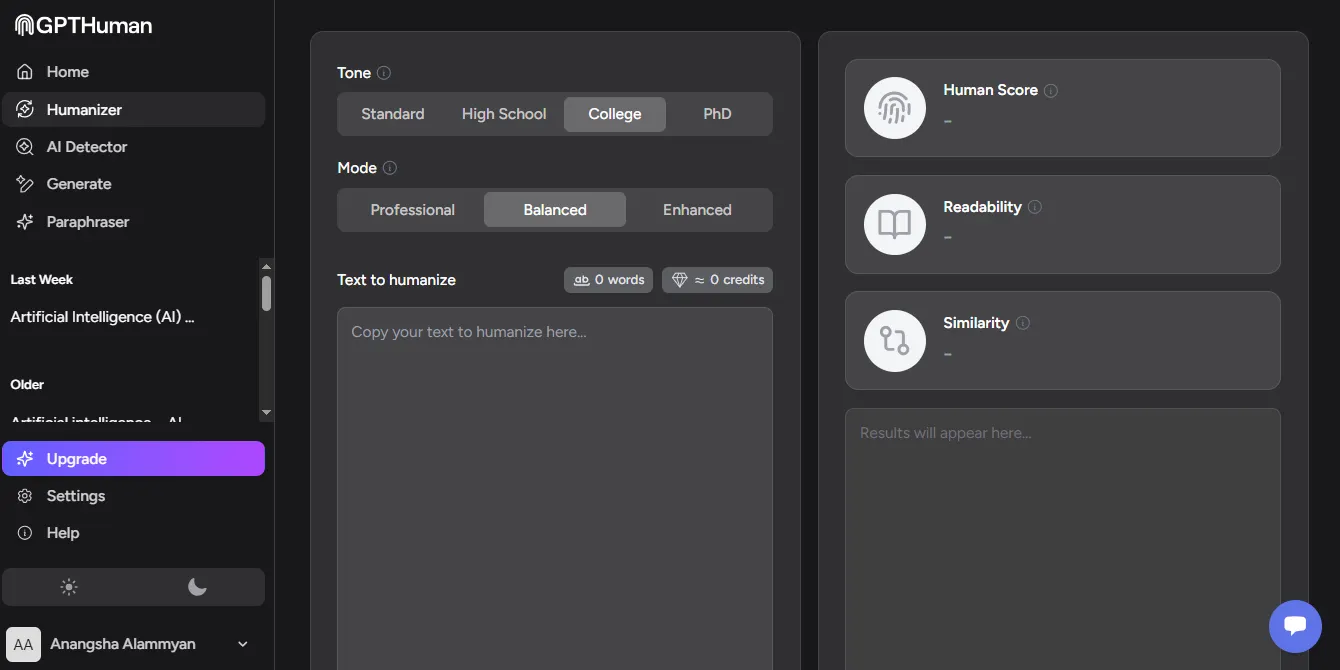
After the draft exists, I polish it using GPTHuman.
Rather than rewriting everything manually, I use it to smooth awkward phrasing and make the article sound more natural.
Then I edit it myself.
That final editing pass is still the most important part of the process.
3. Make sure people can actually find it with Indexly
A beautiful portfolio doesn't help if nobody discovers it.
That's why I pay attention to SEO.
I use Indexly to understand whether my articles are visible in search engines and AI search platforms, helping me identify opportunities to improve discoverability over time.

Publishing is only half the work.
Being discovered is what turns a portfolio into client inquiries.
Where should you publish your portfolio?
You don't have to choose only one platform.
I recommend using all three strategically.
This should become your permanent home.
You own it.
You control it.
Every article strengthens your authority over time.
Medium helps new writers get discovered by readers who don't already know them.
Some articles can even generate income through the Medium Partner Program.
LinkedIn acts as your public proof of expertise.
Sharing your writing consistently makes it easier for potential clients to find you organically.
Mistakes that keep portfolios from getting hired
The biggest mistakes I see are:
- Publishing articles in ten unrelated niches.
- Showing only Google Docs instead of published work.
- Never adding a contact page.
- Focusing on quantity instead of quality.
- Never updating older samples.
Remember:
Five excellent articles outperform fifty average ones.
Final thoughts
A writing portfolio isn't something you build after becoming a successful writer.
It's one of the reasons you become one.
Every article you publish increases the chances that someone discovers your work, trusts your expertise, and reaches out with an opportunity.
Keep publishing.
Keep improving.
And let your writing speak before you ever have to.
If your next goal is turning that portfolio into real income streams through freelancing, blogging, Medium, affiliate marketing, and AI-assisted workflows, I've written a complete guide covering the entire process.
Affiliate disclosure: This article may contain affiliate links. If you purchase through them, I may earn a small commission at no extra cost to you. I only recommend products or services I genuinely believe may be useful.