Why Does AI-Rewritten Text Still Sound Robotic?
Why does AI-rewritten text still sound robotic? I tested tools like GPTHuman, Wordvice AI, TextCortex, and Undetectable AI to understand why some AI writing still feels unnatural in 2026.


AI paraphrasing tools have become incredibly advanced in 2026.
They can:
- rewrite paragraphs
- simplify complex ideas
- adjust tone
- improve readability
- even reduce AI detection risk
But despite all these improvements, there’s still one common problem: some AI-rewritten text still sounds robotic.
Even after paraphrasing, many passages feel:
- overly polished
- emotionally flat
- repetitive
- unnatural
After testing multiple tools including GPTHuman, Jenni, and Undetectable AI, I noticed a clear pattern:
The problem usually isn’t grammar. It’s flow, rhythm, and human variation.
Here’s why AI-rewritten text still sounds robotic, and what actually helps.
AI Often Prioritizes “Correct” Over “Natural”
Most AI rewriting tools are designed to produce:
- grammatically correct sentences
- clear structure
- polished wording
But human writing is rarely perfect.
Real people:
- vary sentence length
- change rhythm naturally
- break patterns
- sometimes sound slightly informal or imperfect
AI tools often smooth everything out too much.
This creates writing that technically reads well but still feels artificial.
That’s why some AI-rewritten passages feel emotionally flat even when there are no obvious grammar mistakes.
Simple Word Replacement Isn’t Enough
Traditional paraphrasing tools mainly focus on replacing words or restructuring sentences.
But robotic writing usually comes from deeper patterns like:
- repetitive sentence rhythm
- predictable structure
- overly formal phrasing
- unnatural consistency
Changing a few words doesn’t always solve those problems.
During my testing, I noticed this particularly with some outputs from Jenni.
The tool produced grammatically strong rewrites, but some passages still felt noticeably AI-generated because the flow remained overly polished and uniform.
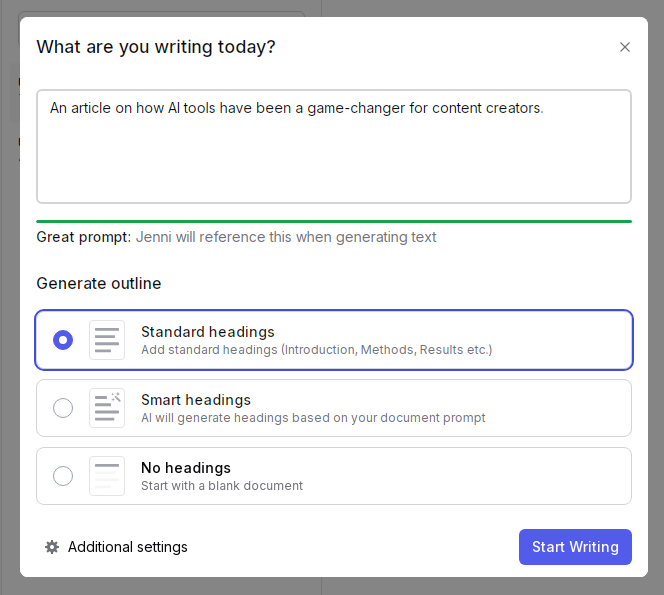
This is a common issue with traditional paraphrasing systems.
Human Writing Has Imperfect Rhythm
One thing I noticed while testing GPTHuman was that the platform focused heavily on tone and readability instead of simply rewriting words.
The tool even includes:
- readability scoring
- similarity scoring
- stealth scoring
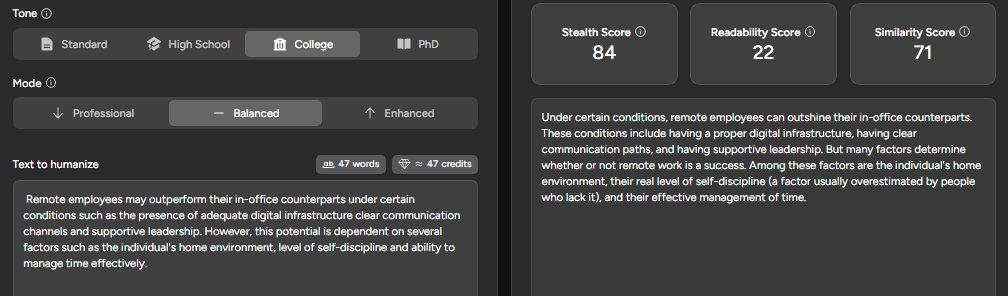
This matters because natural writing isn’t just about synonyms.
Human writing has:
- pauses
- variation
- uneven rhythm
- emotional pacing
When AI tools ignore these subtle patterns, rewritten content can still sound robotic even if the wording changes significantly.
The best humanization-focused tools attempt to adjust sentence flow, not just vocabulary.
Tone Shifts Can Feel Artificial
Another issue I noticed during testing involved tonal rewriting.
For example, TextCortex lets users rewrite passages using tones like:
- Encouraging
- Urgent
While the tonal shifts were noticeable, not every rewritten sentence felt natural.
Some outputs sounded like the AI was trying too hard to force a specific tone into every sentence.
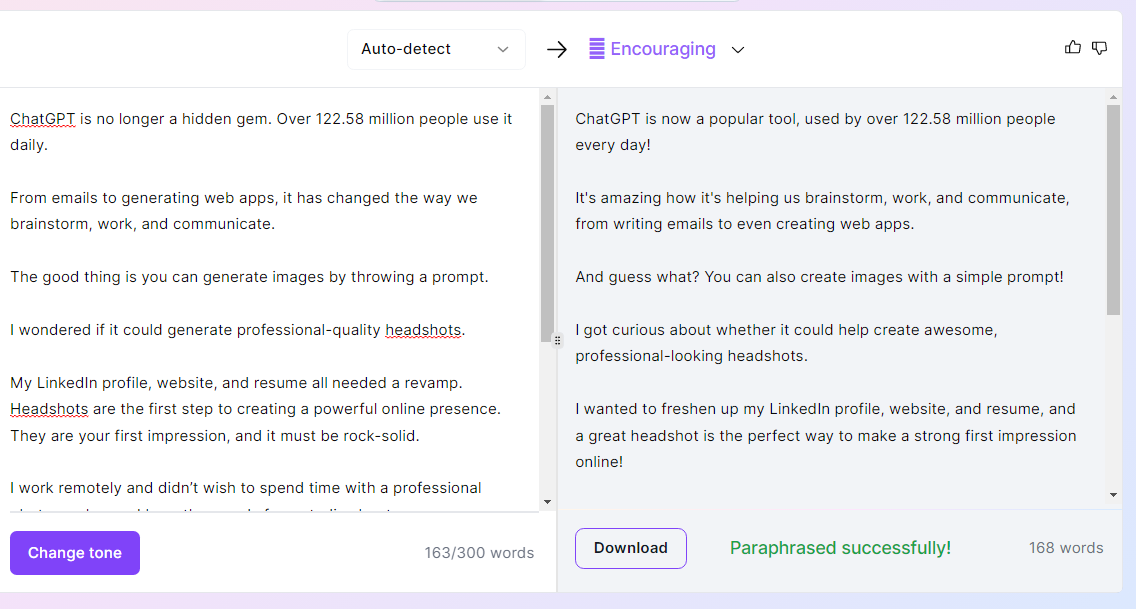
This is another reason AI-generated writing can feel robotic: the tone becomes too consistent and exaggerated.
Real human writing usually contains subtle tonal variation rather than perfectly matching one emotional style throughout the entire passage.
AI Detectors Have Changed the Conversation
In 2026, robotic writing matters more than ever because AI detectors are now widely used by:
- schools
- publishers
- recruiters
- businesses
This is why many newer tools focus not just on paraphrasing, but on humanization.
For example, Undetectable AI combines:
- paraphrasing
- humanization
- AI detection workflows
The platform attempts to make rewritten content sound more natural instead of simply replacing wording.
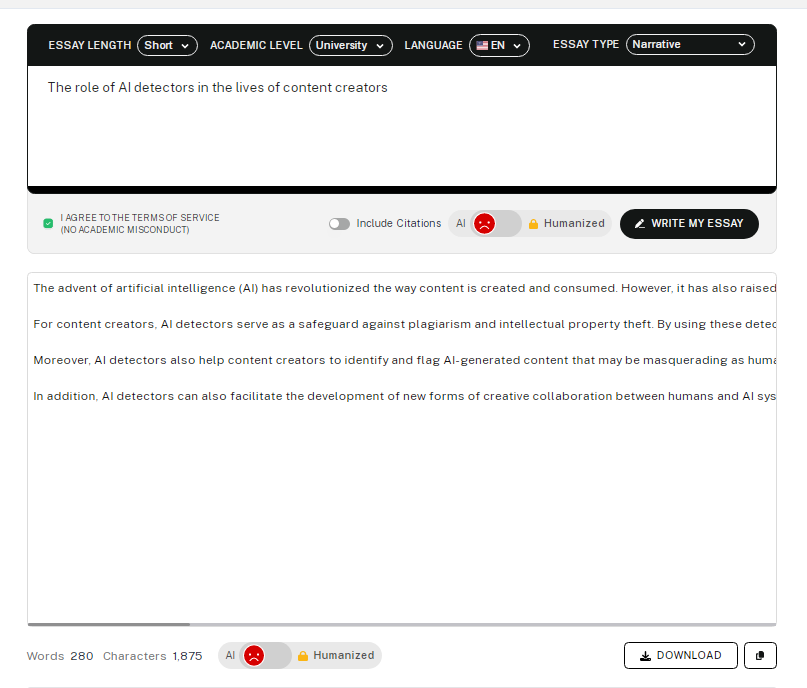
Still, even detection-aware tools are not perfect.
Some rewritten passages can still feel:
- overly structured
- too polished
- emotionally empty
Manual editing still makes a huge difference.
Why Manual Editing Still Matters
After testing multiple AI rewriting tools, I noticed that the best results almost always involved some human refinement afterward.
Even strong tools can produce:
- awkward phrasing
- repetitive flow
- unnatural transitions
That’s why I usually recommend:
- reading the output aloud
- shortening overly polished sentences
- mixing sentence lengths
- adjusting tone manually
AI can accelerate rewriting dramatically. But human editing is often what makes the final version actually sound authentic.
The Best AI Tools Focus on Flow, Not Just Rewriting
The strongest tools I tested didn’t simply swap words.
They focused on:
- natural readability
- sentence variation
- conversational flow
- human tone
That’s one reason GPTHuman stood out during testing. The platform focused heavily on improving how the writing actually felt instead of just generating alternative wording.
The difference becomes obvious when comparing simple paraphrasing vs true humanization-focused rewriting
Final Thoughts
AI-rewritten text still sounds robotic because rewriting words alone is not enough.
Natural writing depends on:
- rhythm
- tone variation
- flow
- subtle imperfections
Many paraphrasing tools improve grammar and clarity, but fewer tools successfully recreate the variation found in real human writing.
After testing multiple platforms, I found that tools focused on readability and humanization generally performed better than tools focused only on rewriting.
That said, no AI tool is perfect out of the box.
The best results still come from combining:
- AI rewriting
- human refinement
- natural editing
If you want to explore the full tools I tested, including GPTHuman, Jenni, Undetectable AI, and more, check out my complete guide to the best AI paraphrasing tools in 2026.
Affiliate Disclosure: This article contains affiliate links. If you purchase through them, I may earn a small commission at no extra cost to you.